“An architect does not need to spend his whole career making monuments for rich people.” - Shigeru Ban
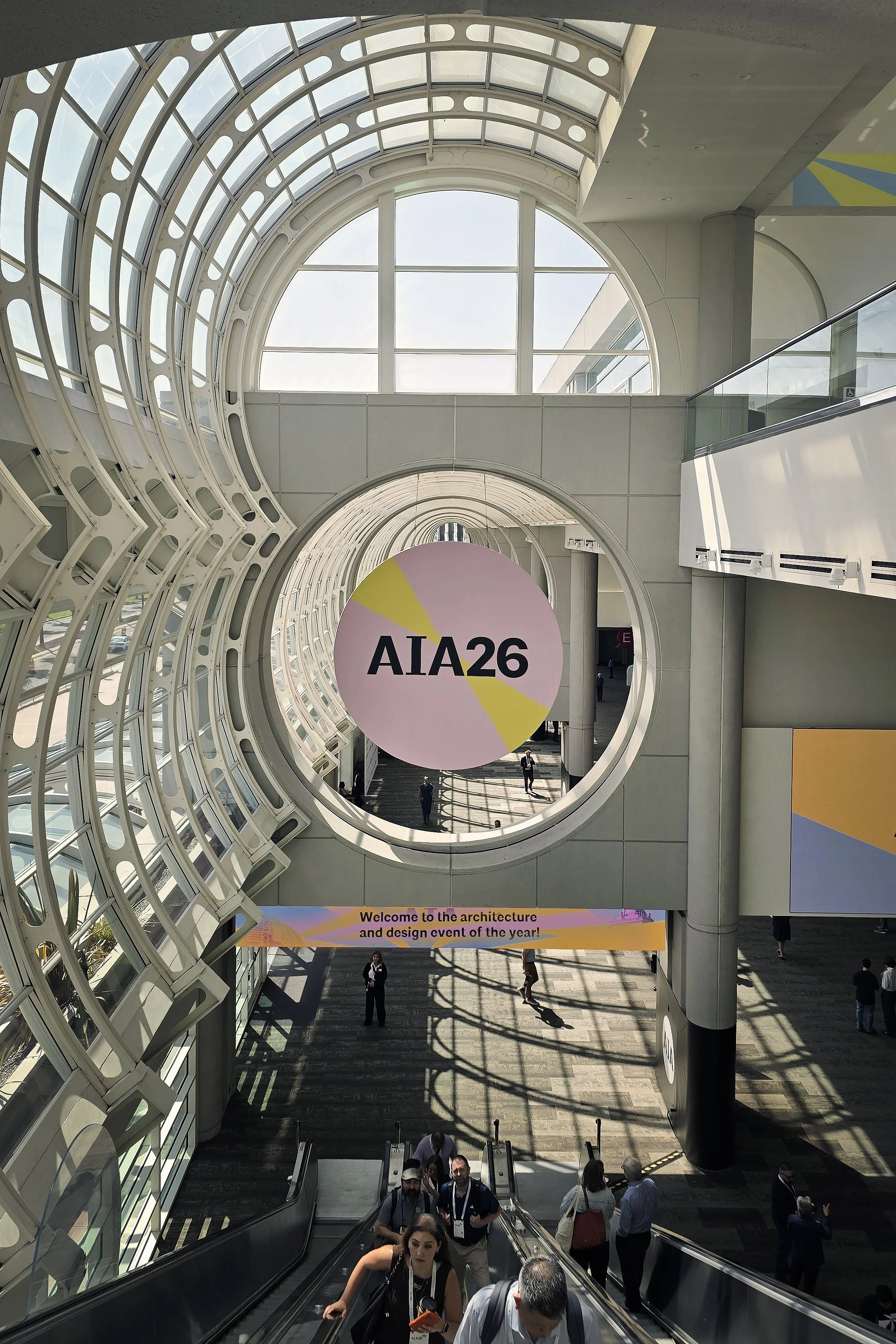
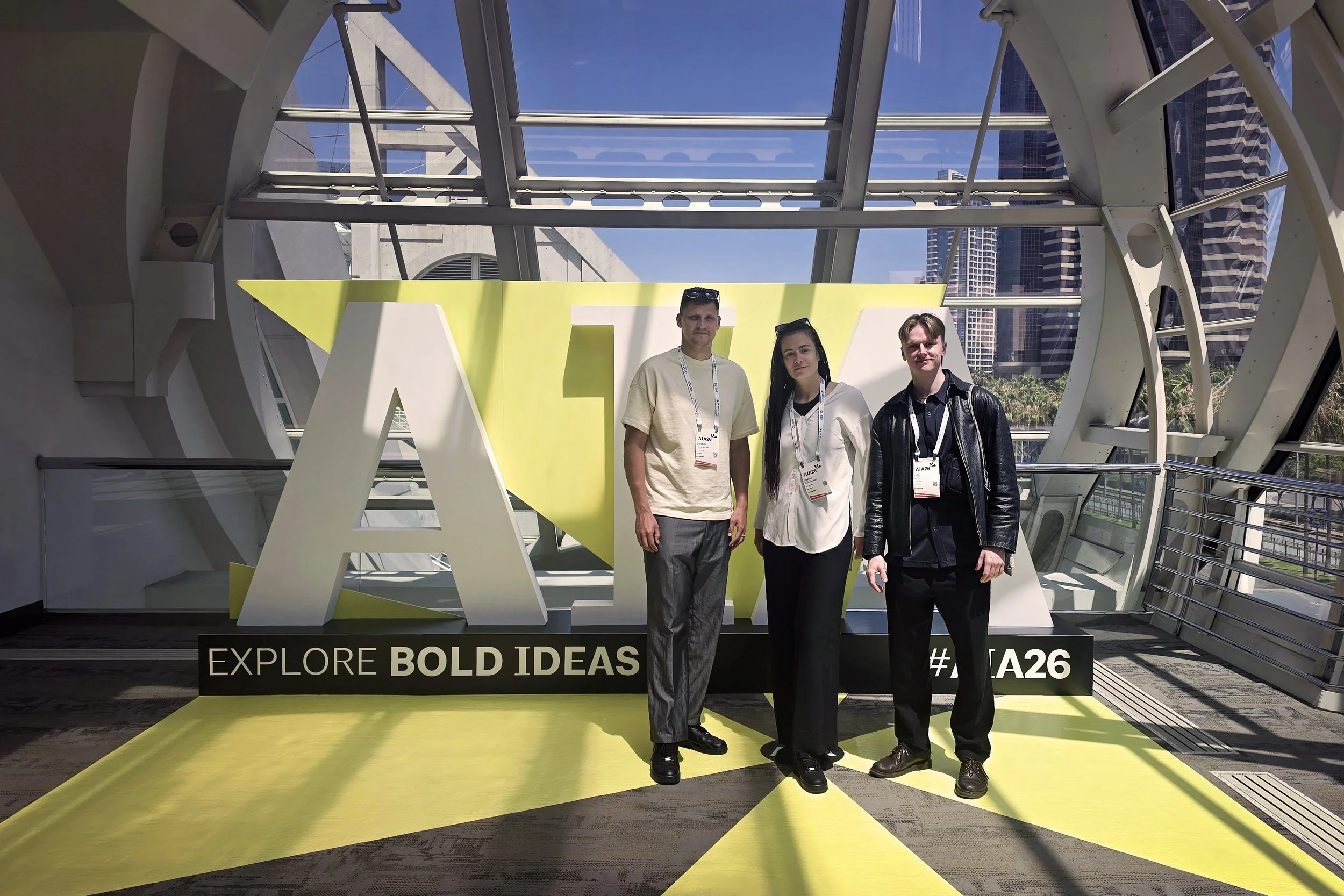
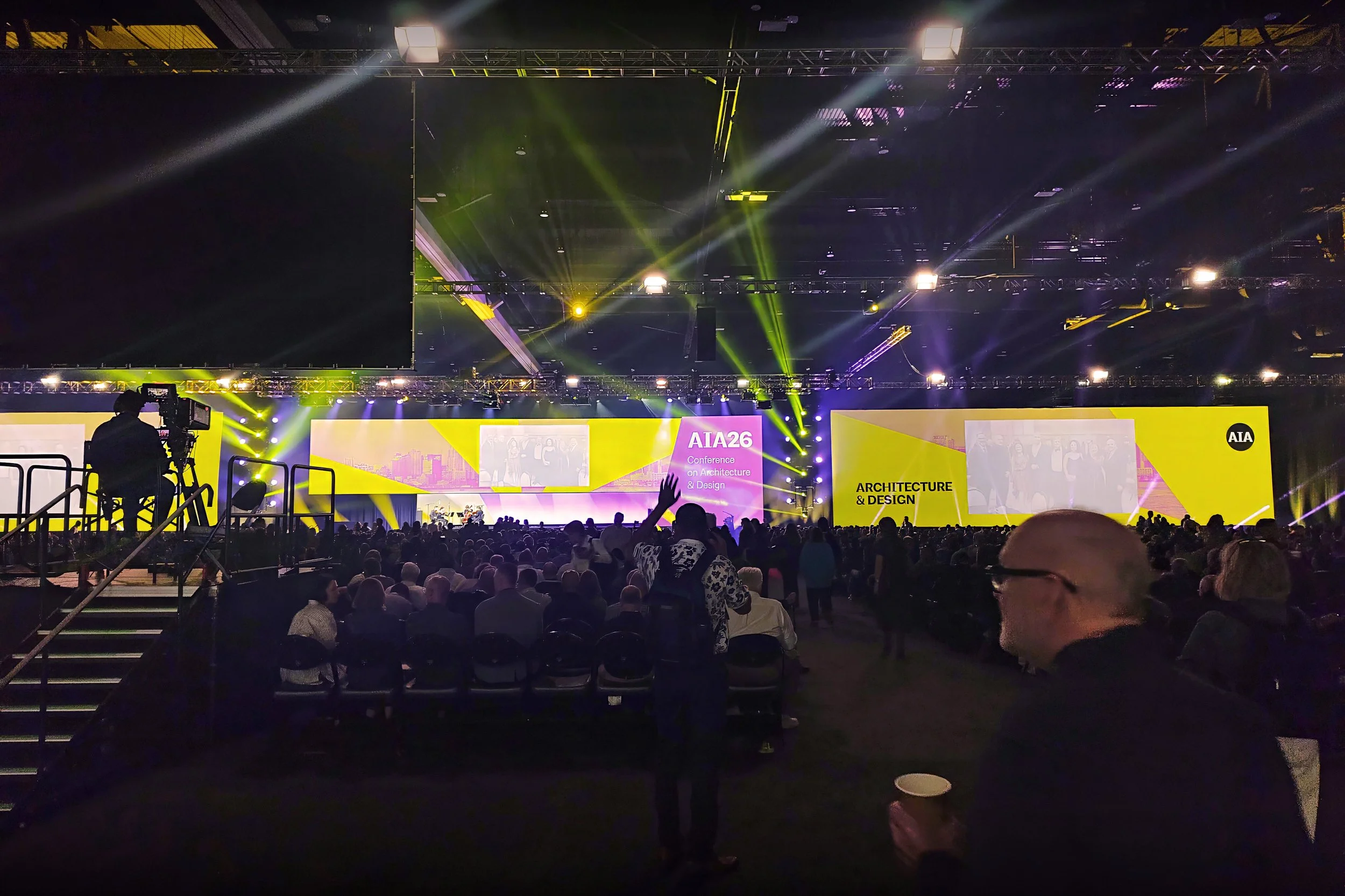
At the opening ceremony of the American Institute of Architects (AIA) 2026 Conference, Shigeru Ban, a Japanese star-architect was bestowed the AIA Gold Medal, the highest award given for lifetime achievement. He works simultaneously on large-scale cultural projects as well as temporary disaster relief sites across the world, using his profile to mobilise architectural knowledge where it is needed most. What he does is truly remarkable in that he decided to self-initiate solutions to pressing issues despite the inherent paradox that good design could prevent many of the tragedies his efforts seek to alleviate in their aftermath. This specific example highlights the wider prevailing condition of the profession in the US as well as the world generally, that was revealed through the conference - good will and cutting edge aspirations, are faced with limited opportunities to enact real impact due to the lack of clients and investment in holistic approaches to the development and regeneration of our environments. We are architects Lisanna, Henri, and Sidhards, and we will offer a short overview of our experience at the AIA 2026 Conference in San Diego thanks to the BAFF Alumni Professional Development Grant.
First, a short introduction of our professional interests is necessary to provide some background to our proposal to attend the Conference. Although we are all architects seeking opportunities to make meaningful contributions to the built environment in the wider sense, we represent somewhat different approaches to practice. Lisanna works in a medium-sized firm Pluss Architects in Estonia, taking part in designing highly ambitious large urban developments that span decades, such as the Hundipea quarter in Tallinn. Sidhards is a practice leader of Free Architecture in Riga, delivering small and medium scale residential, commercial, and cultural projects. Henri is the founder of Spatialist Studio, a practice focused on community projects in Estonia, while teaching and researching the design of public buildings at the Bauhaus University in Weimar, Germany. We therefore entered the conference with varied expectations - Lisanna wished to learn more about innovations in carbon assessment strategies for large-scale projects, Sidhards hoped to explore and connect with experts in mass-timber construction to support his ongoing projects in this evolving field, and Henri to exchange with and expand his network of community-oriented practitioners for potential grant collaborations.
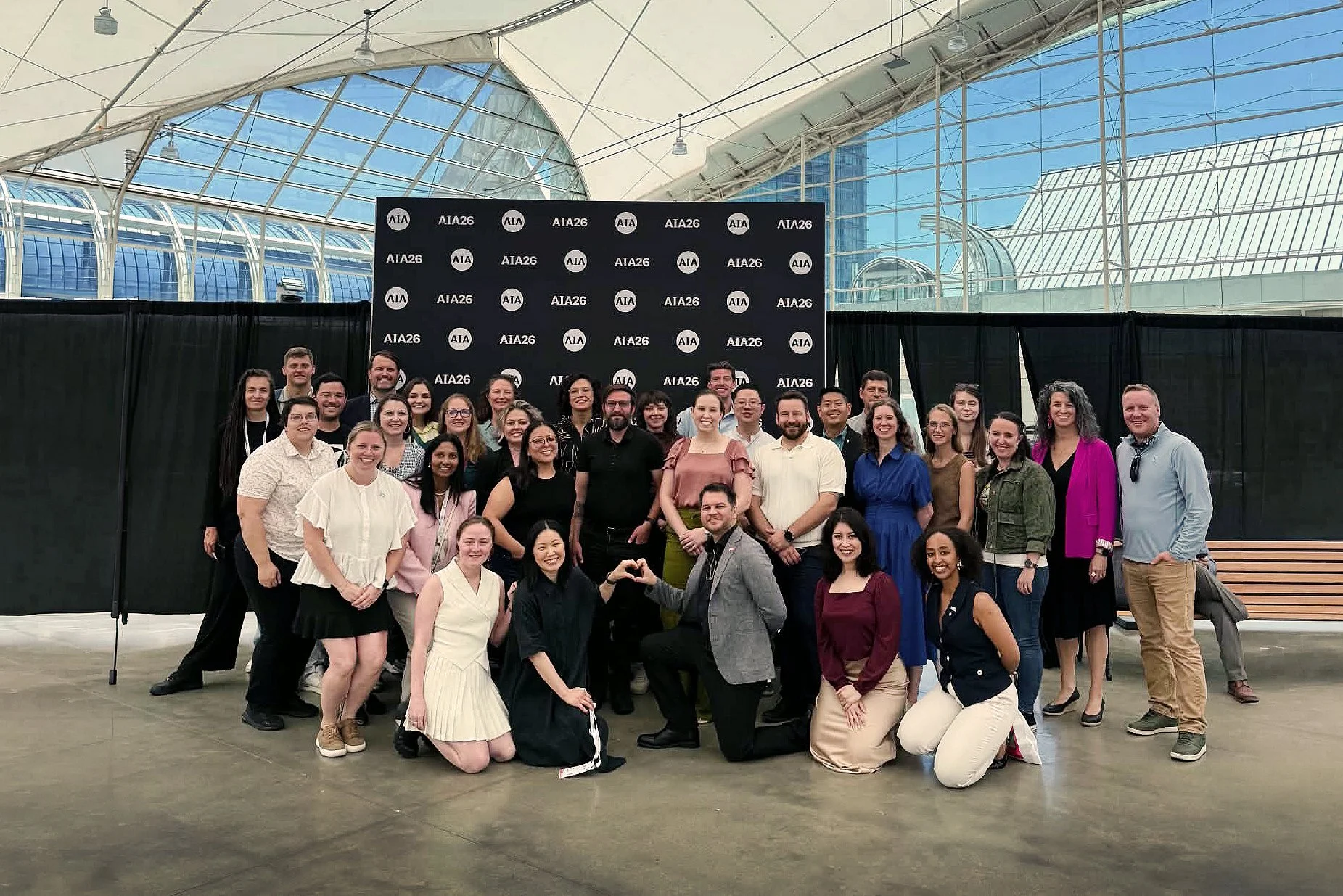
The conference consisted primarily of large keynote lectures, smaller lectures covering all aspects of design from creative to technical, workflow improvement to product installation, with an enormous exposition area with construction product and software merchant stands, as well as networking opportunities across career phases and disciplines. More specifically, focusing on the US industry’s challenges and solutions to mass timber construction, Sidhards gained new knowledge about NLT (nail laminated timber) and DLT (dowel laminated timber) technologies. To support a current library project, he learnt about acoustic strategies and met an expert that has recently completed 3 projects in exactly the same field who will prove a key consultant as the project progresses. The networking events also allowed us to meet local professionals and young architects (up to 10 years post-licence), AIA International representatives, and found out about AIA events in Europe to keep the discussion rolling. Sidhards met multiple prospects for expanding his organised RHEA international workshop network, through academic speakers and mentors.
For Henri, the most valuable connections formed through attending the lecture and discussion with the Architects’ Foundation’s Communities by Design team, who have several decades of experience in working with deprived communities across the US to provide them with roadmaps and design solutions to developing public infrastructure. Learning about the CxD case studies provided useful insight into how to initiate and carry out challenging projects, especially since the impact can be measured through long time-spans as many similar projects in Estonia are still in their early phases. As this type of work mostly occurs through self-initiation and multiple-party grant collaboration, partnerships with veterans in this field are essential.
One of the most popular themes with numerous dedicated lectures was Artificial Intelligence as a tool for improving professional workflows. Of particular relevance to Lisanna were sessions titled ‘AI & Digital Architecture’ and ‘The Why & How of Architectural Firm Ownership’, which focused on integrating emerging technologies into architectural practice while offering new perspectives on long-term career development within a larger firm. Discussions on urban resilience and sea level rise adaptation offered directly applicable knowledge for waterfront regeneration, such as her ongoing work on Hundipea in Tallinn. She also established international connections with architects and researchers working on leadership, sustainability, and AI-driven design tools, creating opportunities for future collaboration and knowledge exchange.
Despite the numerous talks on the topic of AI, it seems the tools are still lacking to have a meaningful impact on our complex industry. While many speakers presented AI as a source of competitive advantage, its environmental impact on land and water resources – an issue with profound spatial consequences – remained entirely unaddressed. While the expo and lectures showcased the incredible variety of technologies and creative potential, this conference highlighted the primary paradox of our profession: while we possess the skills to create sustainable and comfortable environments for living, we lack the client or the market logic to properly harness these skills. Carbon crediting – a lauded solution for quantifying environmental impact – opens an entirely new branch in the sector with new possibilities, but many other straightforward means for socially and environmentally conscious practice, such as our interest in community-driven and natural material constructed architecture, faces similar, if not more difficult upscaling obstacles in the US market context. A professional exchange with local experts around these challenges proved perhaps the most useful outcome for us in addition to the new technical insights. Returning home, we look forward to sharing these learnings with our colleagues. With our various levels of practice, we hope to continue finding ways of working more holistically towards better living environments that withstand and prevent the future challenges our home countries may face.